Read a shower-set material claim by component. The mixer casing, internal waterway, overhead shower, hand shower, riser, hose and holders can have separate material descriptions. “Brass shower” or “ABS shower” is not enough to describe a multi-part assembly, and a metallic finish does not identify the material beneath it.
Use a component map instead of one material label
Start with the component that the claim actually names. Keep that field separate from material information about accessories or internal parts. This helps the buyer compare a specification rather than an impression created by a polished surface or product weight.
| Recorded example | Supported description | Unsupported extension to avoid |
|---|---|---|
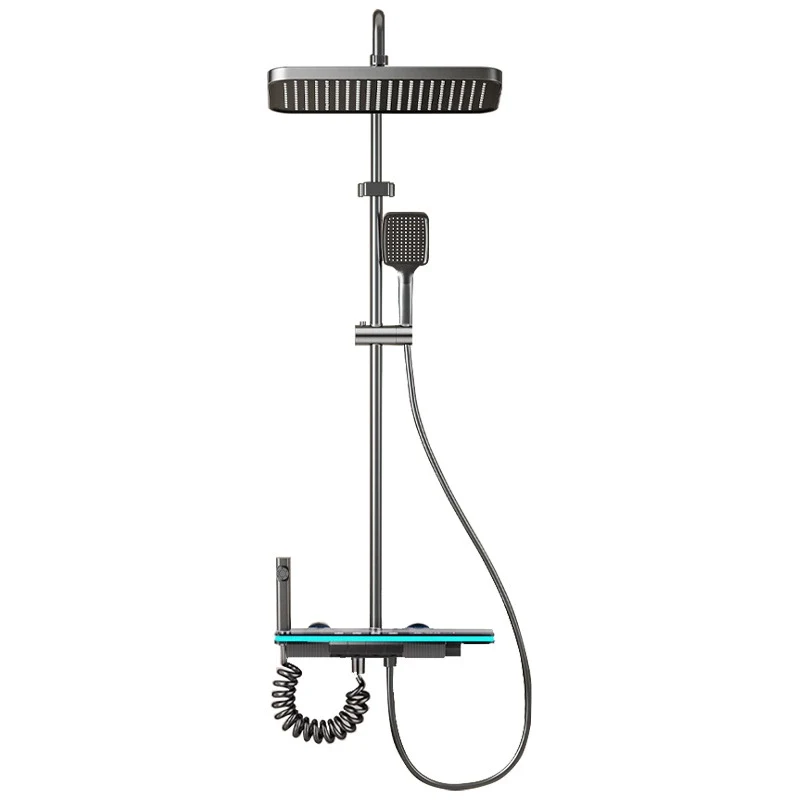
| 1049709521606 | Exact options state ABS body; the matching cutaway identifies a brass internal waterway core | “The entire mixer and shower set are brass” |
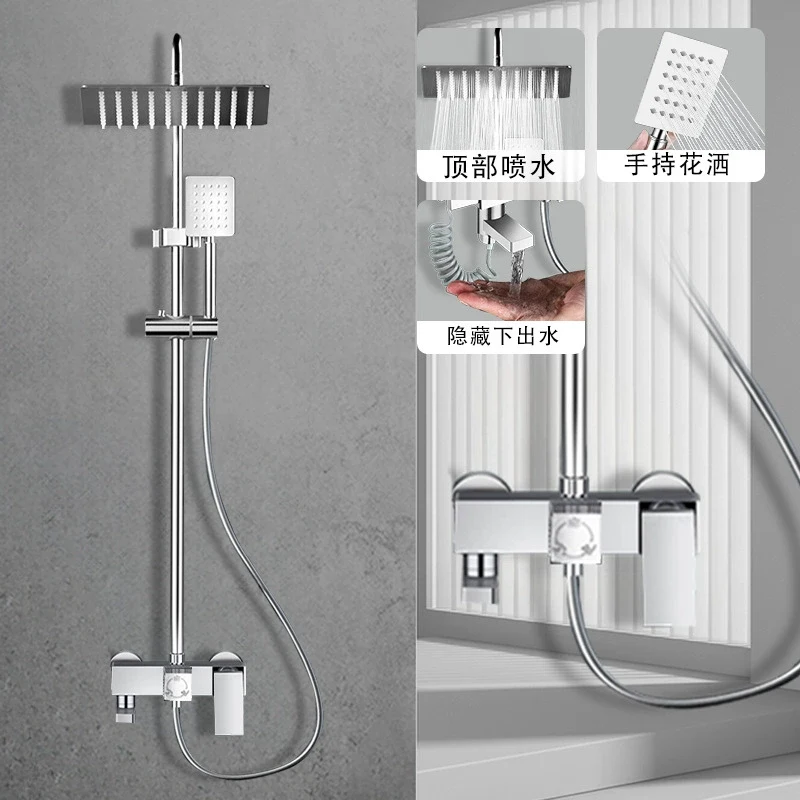
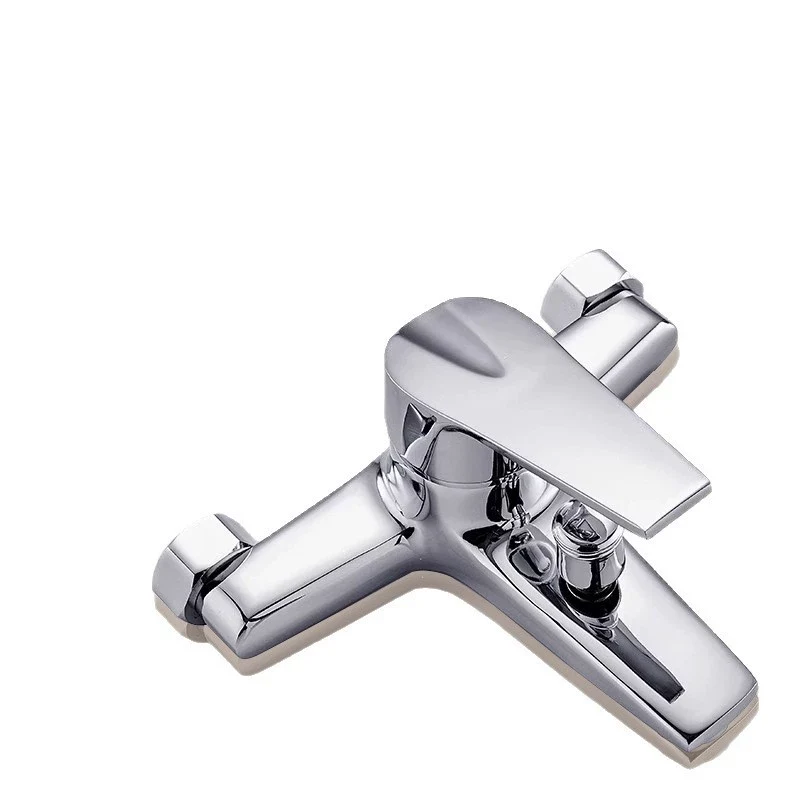
| 1049663109937 | The matched mixer record identifies brass | “The overhead, hand shower, riser and hose are all brass” |
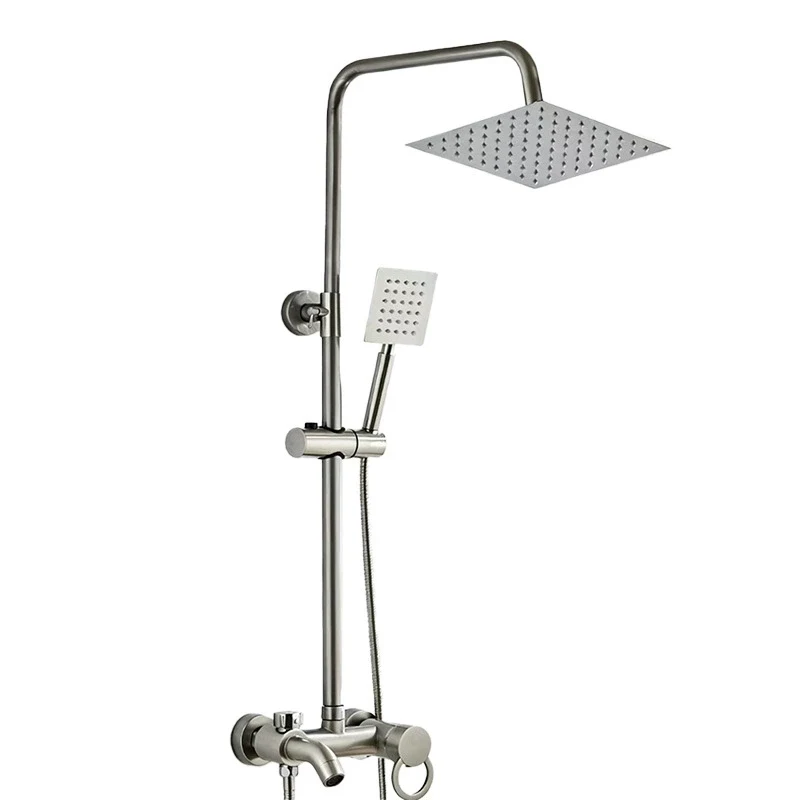
| H43148 / 1053694514487 | Mixer material is listed as copper | Replacing that with a more specific alloy grade without evidence |
| 1050584560218 | All eleven exact configuration labels specify ABS body | Transferring unrelated copper captions to those configurations |
These are product-record examples, not independent material-test results.P04P07P05P11
Why precise wording makes quotations more useful
Imagine two offers both labelled “brass shower set.” One may be referring only to a waterway; the other may specify the mixer body. Without scope, the two offers cannot be compared reliably. Ask each supplier to identify the component and the supporting material description.
The useful next question is not automatically “Which is heavier?” It is “Which part is being specified, what performance does the purchase require, and which evidence supports the selected assembly?” Weight can be affected by geometry and included components. In this catalogue, some recorded weights also lack a net/gross basis, making them unsuitable for inferring material composition.
Our recommendation is to keep three columns in the purchasing record: component, material as documented and evidence reference. Add a fourth column for an unresolved grade or material requirement where the project needs one.
Do not translate beyond the source
A source saying “copper” should not silently become “lead-free brass.” A source saying “stainless steel” should not become “304 stainless steel” when no grade is given. “Chrome” or “gunmetal grey” should not become the base material.
The H43148 record, for example, describes the riser as steel without a grade and separately identifies an ABS sliding hand-shower holder. Those statements should stay separate rather than being converted into an all-copper or all-stainless description.P05
For catalogue reference 1049709521606, distinguishing the ABS body designation from the brass waterway is more informative than hiding either fact. It helps buyers state which part of the construction matters to their purchasing brief.P04
Material identity is not the same as certification
Where drinking-water contact requirements are relevant to the actual product and market, identify the required evidence with the responsible reviewer. NSF/ANSI/CAN 372 addresses lead content; NSF/ANSI/CAN 61 addresses health effects associated with materials and components in contact with drinking water. They are not interchangeable labels.T03T04
This does not mean every shower component requires both certifications, and the examples here do not establish that any QSW model holds them. A material word such as brass is not proof of a particular listing, chemical composition or applicable certification.
Compare suitability through the order specification
Rather than declaring one material universally best, define the requirements for the intended installation, performance, finish and service conditions. Have the appropriate product evidence reviewed against those requirements. This keeps material selection connected to the application instead of making it a marketing contest.
For a sample order, document the expected component materials, supplied assembly and any agreed method of verification. A sample photograph can confirm visible configuration; it is not a chemical composition test. Any destructive examination or specialist testing should be agreed and performed appropriately.
If the material is a firm buyer requirement, make it visible in the quotation and approval record. Do not leave it only in a chat message that may not accompany the production order.
How to handle a conflicting product record
Separate confirmed fields from the conflict. If the head is clearly specified as ABS but the mixer body is disputed, retain the confirmed head material and leave the body claim unresolved. Do not choose whichever advertising phrase sounds more expensive.
When the conflict is resolved, update the product page, comparison table, quotation and related article examples together. A corrected specification is useful only if the old contradictory claim is not still being sent elsewhere.
Buyer questions
Does an ABS body mean every internal part is plastic?
No. Reference 1049709521606 records an ABS body and a brass internal waterway separately. Other products need their own component evidence.P04
Can a metallic colour identify the base material?
Not from appearance alone. Use the component specification and evidence rather than the finish name.
What should I ask for first?
Identify the part you care about and the material or documentation requirement. Then match the answer to the exact model and configuration before approving it.
View the documented mixer combinations or send a component-material requirement.
Sources and product references
- P04. Gunmetal shower set with display options. ↩1 ↩2 ↩3
- P07. Three- and four-outlet wall-mounted shower sets. ↩
- P05. H43148 square-head shower set. ↩1 ↩2
- P11. Silver shower mixer and hand-shower configurations. ↩
- T03. NSF/ANSI/CAN 372 technical requirements. ↩
- T04. NSF/ANSI/CAN 61 testing and certification. ↩