For a regularly used kitchen sink, 304 is our preferred starting specification. It generally gives more corrosion-resistance margin than 201 in wet kitchen service. Consider 201 for a carefully specified, budget-led indoor application with mild exposure and reliable cleaning; do not substitute it into a 304 order without approval.
Material Differences and Buying Consequences
| Decision | 304 stainless steel | 201 stainless steel |
|---|---|---|
| Alloy direction | Chromium-nickel austenitic steel | Lower nickel, with more manganese and nitrogen supporting the austenitic structure |
| Corrosion planning | The stronger default between these two for repeated wet use | Better suited to milder exposure; gives less margin where water, salt or residues remain |
| Purchase cost | Higher nickel content can increase material cost | Lower nickel can reduce material cost; compare the complete fabricated sink price |
| Everyday kitchen use | Recommended starting point for distributor and project kitchen ranges | Consider only with a defined application, grade and care plan |
| High humidity or coastal exposure | Prefer over 201, then review actual chlorides, cleaning and exposure; severe conditions can call for a higher-alloy grade | Avoid choosing solely for the lower price in these conditions |
| Order identification | Record the grade, finish, thickness and construction | Record the exact grade and prevent an unapproved substitution or generic “stainless” label |
ASSDA's guidance explains why lower-nickel 200-series choices need application-specific corrosion review; nickel percentage alone is not a complete corrosion rating. Outokumpu describes the alloy families and the effect of composition. See the linked material references below.
Choose by Use and Maintenance
For apartments and everyday residential kitchens, choose a suitable 304 sink with the bowl size and installation format the cabinet can accept. For hotel kitchenettes and regularly cleaned accommodation, keep the same 304 starting point and agree cleaning instructions, drainage and spare waste components. For humid or coastal locations, review salt exposure and residues with the material specification; 304 is not a universal marine-grade promise.
A budget-led 201 proposal should make its trade-off visible in the quotation. Retain the declared grade and test or material documentation required by the order, then compare complete samples under the intended use conditions.
Grade Is Only One Part of Sink Construction
Thickness and forming affect rigidity and dent resistance; deep forming can change local thickness. Welded corners and accessory joints need sound finishing and cleaning. Surface roughness, scratches, drainage and retained deposits also affect appearance and corrosion performance. Compare these features alongside the steel grade, waste assembly, sound treatment and mounting package.
Start with a Documented QSW Model
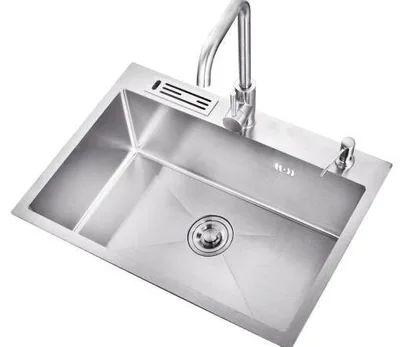
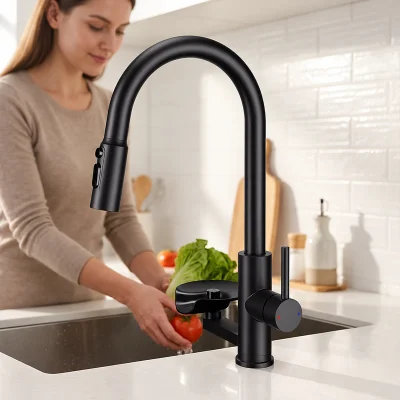
KS-25 / SS003 is a SUS304 rear-deck rain-rinse workstation starting point. KS-26 / SS009 is a SUS304 piano-control workstation option. Select the size and accessory scope for the cabinet and usage brief.
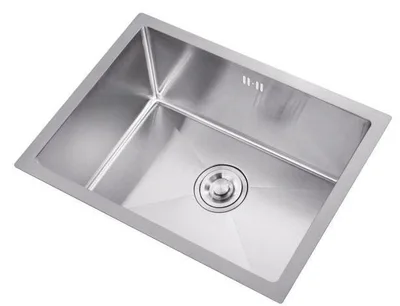
Specify the required steel grade on the KS-01 quotation alongside its 450 × 400 mm overall format, selected finish and accessory package. Use the installation drawing for the worktop opening.
Related: KS-01 · sink selection guide
Send your sink models, grade requirement and quantity for a factory quotation covering construction, finish, waste and packing.
Frequently Asked Questions
Which grade should I start with for a hotel kitchenette?
Start with a suitable 304 construction and choose the bowl layout, finish and waste components for the kitchenette. Review the cleaning and water exposure as part of the specification.
Can I compare sink prices using only the steel grade?
Compare grade together with thickness, forming or welding, surface finish, size, accessories and packaging. Those differences can change both cost and service performance.